When Sorrow Leads You Closer to God
One of the things that stood out to me as I read 2 Corinthians 7:10–12 was Paul’s description of two different kinds of sorrow.
He teaches that there is a sorrow that leads us toward God, and a sorrow that pulls us away from Him.
I know both of those sorrows.
There was a season during what I often call my “dark night of the soul,” when everything I thought I knew seemed to be falling apart.
Questions surfaced.
Assumptions crumbled.
Some days I felt grief over things I had believed, grief over mistakes I had made, and grief over the person I thought I should have been by then.
At first, some of that sorrow looked a lot like shame.
The adversary would whisper that my struggles meant I was failing.
That my questions made me weak.
That my mistakes somehow disqualified me from God’s love.
That kind of sorrow only led to discouragement.
It made me want to hide.
But there was another kind of sorrow that began to emerge.
A softer sorrow.
A holy sorrow.
The kind that gently invited me to look honestly at my life while still believing I was deeply loved by God.
Instead of condemning me, it called me forward.
Instead of convincing me I was broken, it helped me see where healing was needed.
Paul calls this “godly sorrow.”
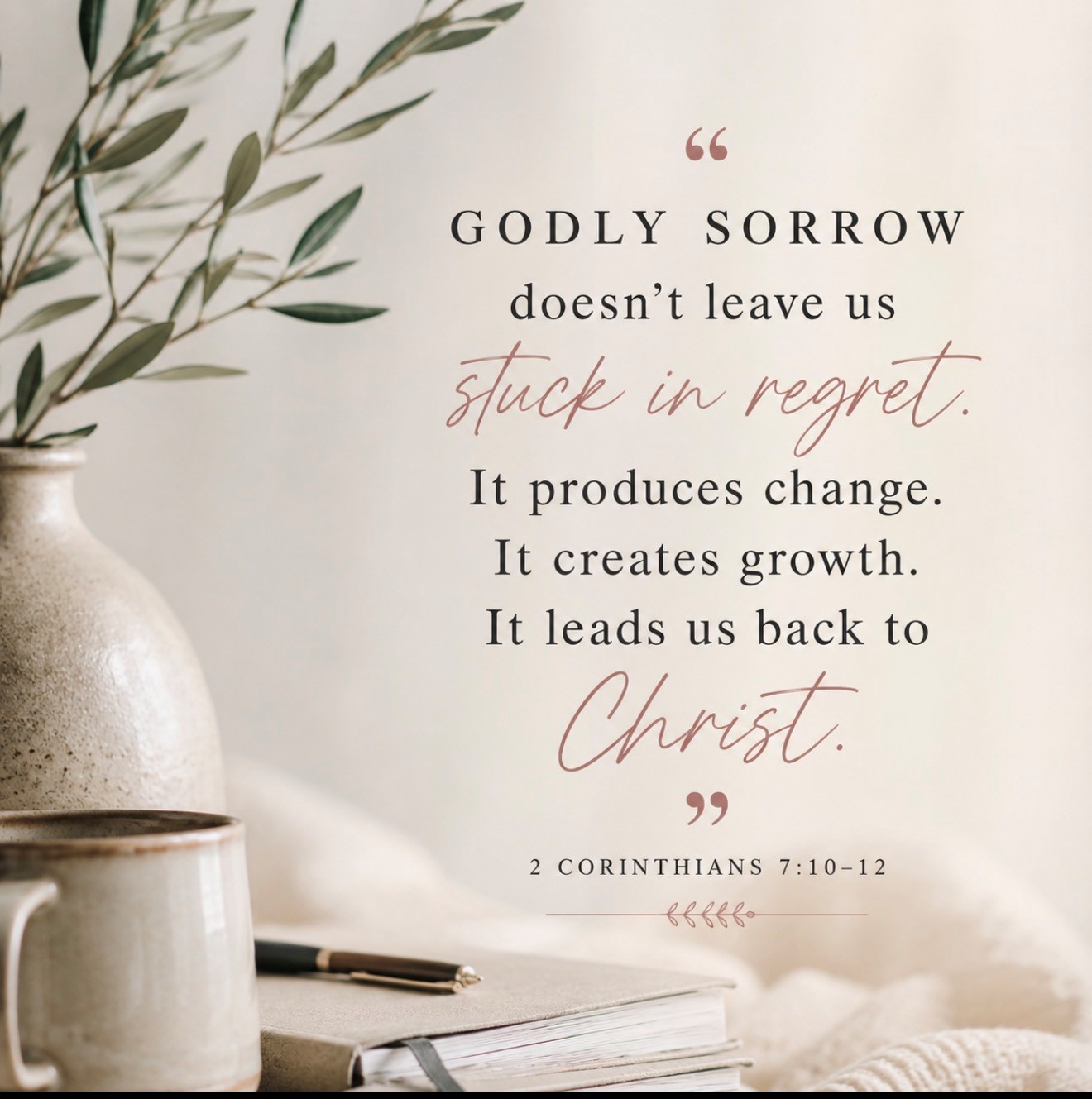
What I love is that godly sorrow doesn’t leave us stuck in regret. It produces change.
Paul lists some of the fruits of godly sorrow: diligence, a desire to make things right, a renewed passion for what matters, and a willingness to move forward. Godly sorrow creates movement. It creates growth. It leads us back to Christ.
I’ve seen this often in coaching.
Many people come carrying deep regret. They replay conversations, mistakes, failed relationships, and missed opportunities. They believe if they punish themselves long enough, somehow healing will come.
But shame has never been a good teacher.
Godly sorrow is different.
Godly sorrow says, “Let’s learn from this.”
Godly sorrow says, “Let’s bring this to Christ.”
Godly sorrow says, “You don’t have to stay here.”
What comforts me most is knowing that God never uses sorrow to push us away. He uses it to draw us closer.
If your heart feels heavy today, perhaps the question isn’t whether you’re feeling sorrow.
Perhaps the question is this:
Is your sorrow leading you toward Jesus or away from Him?
Because one produces despair.
The other produces transformation.
And I am so grateful for a Savior who can take even our deepest regrets and turn them into something that leads us home.